

Ball Throwing: As Good as it Looks?
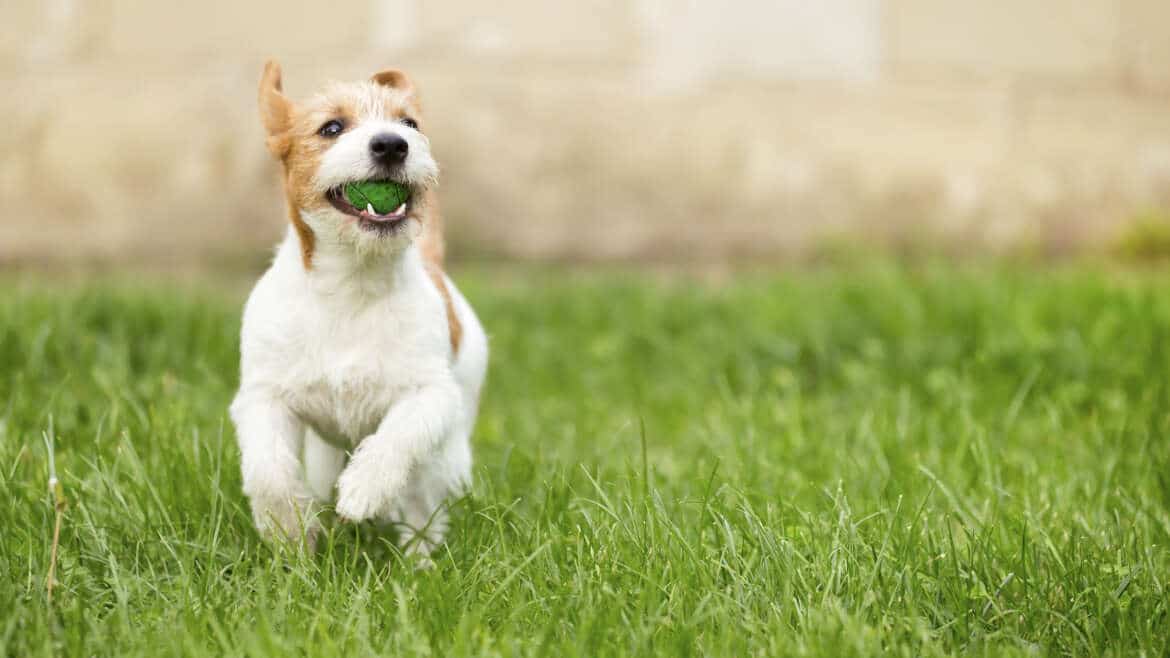
“Go fetch!”. As dog owners, we all know the phrase. Most of our dogs love the game of running after a ball or toy, leaping to catch it, then galloping back to return to their owner to repeat the process again… and again… and again! Recently, concerns have been made about the health impacts of ball and toy throwing on our dogs, but why should we be cautious about a game our dogs seem to love so much?
Imagine you are throwing a ball for your dog. This could be with your arm, or with a throwing tool such as a Nerf gun or ball thrower. The ball goes flying through the air for a long distance and your dog begins to chase after it.
Your dog will go from standing still to an instant gallop requiring large amounts of energy and muscle activation to propel themselves forwards. As your dog chases, they may run over lots of different surfaces including slippery mud or deep surfaces such as sand as well as holes in the ground and hills. All of these changes in surface at high speed put excessive forces through the limbs of a dog. This is not where the exertion stops. When your dog finally reaches the ball, they may leap up to catch it, or slam on the brakes. As the dog hits the ground and twists following these actions joints and tissues go through a huge amount of strain to maintain the dog’s posture.
You may debate, “But my dog loves fetch, why would they keep going if it hurts?”. Many dogs during this game will have very high arousal levels, from this increase of adrenaline, it is highly likely your dog will mask any discomfort experienced.
If a dog is repetitively running, jumping and twisting at these levels, they are more likely to fall victim to joint damage and tissue strain. Diseases such as the incurable and often painful osteoarthritis is well known to be more prevalent in dogs that have undergone excessive joint wear. Following this, there is risk of exacerbating diseases such as hip and elbow dysplasia.
Cruciate injury is also at high risk with this kind of exercise which may lead to increased pain and the potential need for surgical intervention.

“So, what can we do to help our dogs?”
There are many different ways we can still allow our dogs to have fun without increasing their risk of injury.
– Warm Up
Before playing any games with your dog it is really important for the to have a “warm up”. This can include a small walk, or some small exercises such as sit to stands. A warm up will encourage an increase in blood flow through the tissues and begin to prepare your dog for elevated exercise levels so their body is more able to adapt.
– Avoid Ball Throwing Aids
Commonly used ball throwers, and ball throwing guns launch a ball to an excessive distance at fast speeds which are a lot more likely to cause your dog to gallop and brake at damaging speeds. If you are going to play fetch with your dog, try throwing at a smaller distance using your arm, or try rolling the ball on the ground.
– Avoid Throwing Heavy Toys
Dogs naturally carry 60% of their bodyweight through their front limbs. When a dog is carrying a heavier or larger object, that weight can be shifted towards their rear end to cope with the excessive load. This increase in loading can 2 lead to excessive joint and tissue wear in the hind end. Try to keep any toys light to avoid this.
– Try Mentally Stimulating Games
As well as having its physical demands, ball throwing is often a game that leads to high arousal in dogs. Because of this it can lead to over-excitability and obsessive behaviours. As an alternative, try some more mentally challenging games such as hiding a toy or ball and allowing your dog to search for it. You can even use a toy as a reward during training tasks. Not only will these games challenge your dog, they will also help you and your dog bond as a team!
All in all, ball throwing is a very common and well-loved game that most of us have participated in with our dogs. Although a ball throw on occasion is unlikely to cause our dog harm, when it is repeated frequently at high speeds and distances, our dogs are at increased risk of injury. With limited and gentle play, as well as more “dog safe” alternative games, your dog can still enjoy playing with their beloved toys while remaining comfortable and happy.
Remember, you can always contact your local dog trainer or behaviourist if you would like assistance for different games to play with your dog. If at any point you believe your dog is uncomfortable or showing signs of distress, please seek the attention of your vet.
Cara Curtis-Mays
MVetPhys, MNAVP, MRAMP
Veterinary Physiotherapist